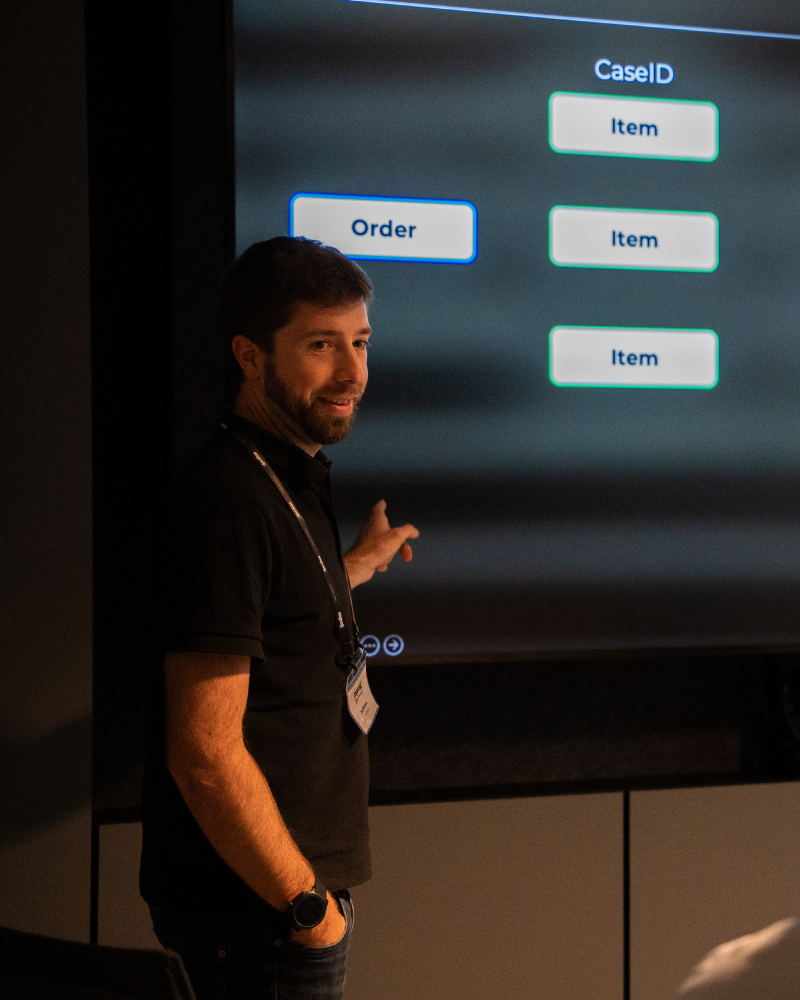
Switch your software. Not your data strategy.
mpmX runs natively on your data platform, whether Snowflake, Databricks, or Qlik. Your governance stays in place, and AI agents find process context right where your data lives. And the switch? Planned, step by step, without starting over.

Trusted by industry leaders





Platform-native Process Intelligence
mpmX is a platform-native Process Intelligence solution: it analyzes business processes directly on the data platform a company already runs, instead of copying the data into a Process Intelligence vendor's cloud. mpmX reads the event log via pushdown on Snowflake or Databricks and stores the results, such as variants, throughput times, and conformance, right next to it. There, the process model and semantic layer form the Context Layer for AI agents. BI, planning, and AI work from the same KPI definitions, and the platform's governance continues to apply. Without a data platform of its own, a company can run mpmX on-premises or in the cloud. Existing case definitions and KPI logic carry over when you switch.


Three reasons companies switch Process Intelligence vendors
Your data strategy has moved on. Your Process Intelligence setup hasn't.
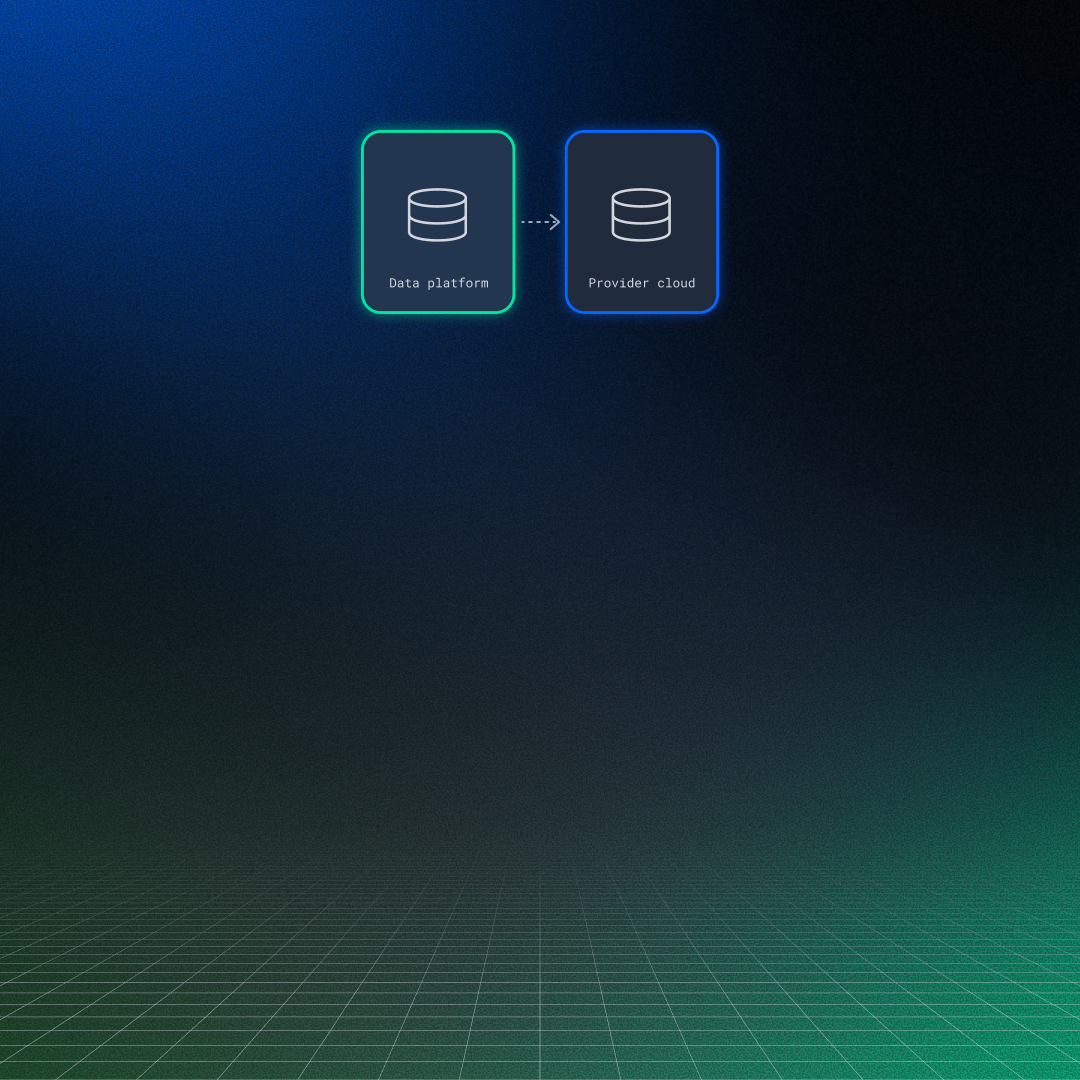
A second data stack next to your own
Your data strategy is built on Snowflake, Databricks, or Qlik. Yet the event log and process model sit with your Process Intelligence vendor, with their own governance and their own bill.

Little room for your own AI
The vendor decides on the language model, client, and front end. Process context for AI agents lives in their cloud, not on the platform where your AI runs.

Rising costs, unclear ROI
New processes and add-on modules each come with their own price tag. And the dashboard doesn't show whether an initiative actually paid off.

What changes with mpmX
One model on your platform
mpmX runs natively on Snowflake, Databricks, or Qlik, or alternatively on-premises or in the cloud. The event log isn't replicated, BI and Process Mining share the same data model, and mpmX inherits permissions from your platform.
AI under your control
The process model and semantic layer live in your database as the Context Layer, right where your AI runs. You choose the language model and client, and every answer traces back to a transparent query. Test AI agents against real process data in the Agent Workbench before they go live.
Predictable
costs
A transparent license model with no separate module pricing. Additional use cases come at no extra license fee, and your existing platform doesn't pick up a second infrastructure bill.
The difference is in the architecture
The established vendors have strong platforms. The difference is where the process model and AI context live, and who controls them.
 | Celonis | |
|---|---|---|
Integration | Runs on your platform. Native on Snowflake, Databricks, BigQuery, or Qlik, with no data copies. Non-SAP sources included. | Event log and process model are also stored in the Celonis cloud. |
Deployment | Your choice. On-premises, hybrid, or cloud. | Cloud only. The legacy on-premises extractor will be discontinued at the end of 2026. |
AI integration | Context Layer on your platform. The semantic layer and process model live in your database, in the same governance and compute environment as your platform's AI services (e.g., Snowflake Cortex). BI, Process Intelligence, and AI share the same KPI definitions. Your LLM, your choice, with traceable queries. | AI agents run within the Celonis ecosystem. Context lives in the Celonis Context Model, built on the Process Intelligence Graph and accessed via MCP Server and APIs, with its own governance layer. |
Time to value | Around 8 weeks. First results around 8 weeks after project kickoff. | Multi-month implementation project. |
Pricing | One transparent price. No hidden module fees. | Pricing on request, often over USD 1M per year, plus add-on costs per module. |
Migration | With a parity check. A structured migration path, validated against your existing numbers before the old system is switched off. | – |
| SAP Signavio | |
|---|---|---|
Integration | Runs on your platform. Native on Snowflake, Databricks, BigQuery, or Qlik, with no data copies. Non-SAP sources included. | Data sits on SAP BTP, with a strong SAP focus. Non-SAP sources are harder to connect. |
Deployment | Your choice. On-premises, hybrid, or cloud. | Cloud/SaaS on SAP BTP, no on-premises option. |
AI integration | Context Layer on your platform. The semantic layer and process model live in your database, in the same governance and compute environment as your platform's AI services (e.g., Snowflake Cortex). BI, Process Intelligence, and AI share the same KPI definitions. Your LLM, your choice, with traceable queries. | AI agents such as Dashboard Analyzer and AI Agent Mining are tied to SAP BTP. Context stays within the SAP ecosystem; SAP data is replicated via Datasphere. |
Time to value | Around 8 weeks. First results around 8 weeks after project kickoff. | Heavy modeling effort before the first results. |
Pricing | One transparent price. No hidden module fees. | Suite pricing within the SAP contract; individual modules are hard to separate. |
Migration | With a parity check. A structured migration path, validated against your existing numbers before the old system is switched off. | – |
| IBM | |
|---|---|---|
Integration | Runs on your platform. Native on Snowflake, Databricks, BigQuery, or Qlik, with no data copies. Non-SAP sources included. | Separate environment alongside your data platform, with significant infrastructure overhead. |
Deployment | Your choice. On-premises, hybrid, or cloud. | SaaS or on-premises via Cloud Paks on Red Hat OpenShift. |
AI integration | Context Layer on your platform. The semantic layer and process model live in your database, in the same governance and compute environment as your platform's AI services (e.g., Snowflake Cortex). BI, Process Intelligence, and AI share the same KPI definitions. Your LLM, your choice, with traceable queries. | watsonx plus a partnership with Anthropic (Claude), but within the IBM ecosystem. Context lives in watsonx, not on the customer's data platform. |
Time to value | Around 8 weeks. First results around 8 weeks after project kickoff. | Steep learning curve, difficult onboarding (Gartner). |
Pricing | One transparent price. No hidden module fees. | watsonx from USD 1,050/month; complex on-premises license metrics. |
Migration | With a parity check. A structured migration path, validated against your existing numbers before the old system is switched off. | – |
| QPR | |
|---|---|---|
Integration | Runs on your platform. Native on Snowflake, Databricks, BigQuery, or Qlik, with no data copies. Non-SAP sources included. | Snowflake-native; the older on-premises/SaaS engine is maintained separately. |
Deployment | Your choice. On-premises, hybrid, or cloud. | SaaS, on-premises, or as a Snowflake Native App. |
AI integration | Context Layer on your platform. The semantic layer and process model live in your database, in the same governance and compute environment as your platform's AI services (e.g., Snowflake Cortex). BI, Process Intelligence, and AI share the same KPI definitions. Your LLM, your choice, with traceable queries. | AI Findings and root cause analysis, but no orchestration of AI agents or LLMs. Context sits on Snowflake, with no Context Layer for AI agents. |
Time to value | Around 8 weeks. First results around 8 weeks after project kickoff. | Moderate; the proprietary front end limits power users. |
Pricing | One transparent price. No hidden module fees. | Subscription; according to the vendor, cheaper than enterprise tools. Small vendor (around EUR 10M revenue). |
Migration | With a parity check. A structured migration path, validated against your existing numbers before the old system is switched off. | – |
As of October 2026. Information on other vendors is based on publicly available sources, including vendor websites and product documentation, vendor events, and user reviews. Product names mentioned are trademarks of their respective owners.
A comparison for your environment
Every starting point is different. In a technical comparison, we map your data sources, use cases, and current setup against mpmX, in concrete terms and with no obligation.
The switch is easier than you think.
Switching vendors doesn't mean starting over. Your case definitions and KPI logic carry over, and we only migrate what your team actually uses.
Review workshop
We take stock of use cases, dashboards, and data sources, and work out together what your team actually uses and what gets migrated.
Your migration plan
The assessment becomes a roadmap with phases, timeline, and team setup, aligned with everyone involved.
Offer and implementation
You receive a binding offer. Then we migrate in stages: your existing logic is transferred to your platform with AI support, and your current system keeps running in parallel until the numbers match.
Test in parallel before you decide
See mpmX in live operation, with your data and alongside your current system, before you decide on the migration. No lock-in.
Download the migration plan
The complete guide, covering every step, resource planning for staffing and project scope, and the technical requirements for the switch.

Recommended by leading companies. Recognized by analysts.
Gartner® Magic Quadrant™ for Process Mining Platforms
Platform Native Solution for Zero Data Copy
4,7
Object-Centric Process Mining (OCPM)
Conformance Checking Contest Award
FAQ
Answers to the questions that typically come up before a vendor switch.
No. mpmX processes the event log via pushdown directly on Snowflake or Databricks, without replication, and stores the results right next to it. mpmX uses the platform's compute and storage and inherits its permissions, so no second governance layer is created.
Yes. With mpmX, you're free to choose the language model and client, cloud-based or local. The process model and semantic layer stay in your database as the Context Layer, and every answer traces back to a transparent query.
Yes. Case definitions, activity catalogs, KPI logic, and mapping tables carry over, because mpmX works with the same case, activity, and event model. The transformation logic is rebuilt in SQL or dbt on the data platform. Dashboards and analyses are rebuilt on mpmX Templates.
3 to 6 months for full implementation, depending on the number and complexity of use cases. Before that, the review workshop, migration plan, and offer take about 6 to 10 weeks combined. The first use cases go live about 8 weeks after implementation starts.
Yes. The migration happens in stages rather than all at once, and your current system stays in operation until the KPIs in mpmX match the previous values. Only after this parity check is the old system switched off.
Yes, for the core Process Mining capabilities: process discovery, conformance checking, root cause analysis, and object-centric process mining (OCPM). In mpmX, OCPM is standard, not an add-on module. The review workshop clarifies which platform-specific features need a redesign before any decision is made.
The cost has two components: one-time migration services and an annual platform license. The license has no separate module pricing, and additional use cases come at no extra license fee. We put together a concrete offer only after the review workshop and migration plan.
Let's assess your situation
In 30 minutes, we'll clarify where your data lives, which use cases your team actually uses, and what a switch would mean for your data platform. No obligation, no preparation needed.
Who will you be talking to?
Jan Birkholz, Migration Expert