

Process Mining
with mpmX
Use Process Mining to identify inefficiencies and unexpected business values in demanding data environments.
We are named a Leader for mpmX by global analysts



The definition
Process|Mining
[ˈprəʊ.ses ˈmaɪ.nɪŋ], the; (Business Process Discovery)
Automated business process analysis – with all relevant key figures – based on digital traces in IT systems. Process knowledge contained in data, implicit and otherwise hidden is visualized and thus tangible and transportable.
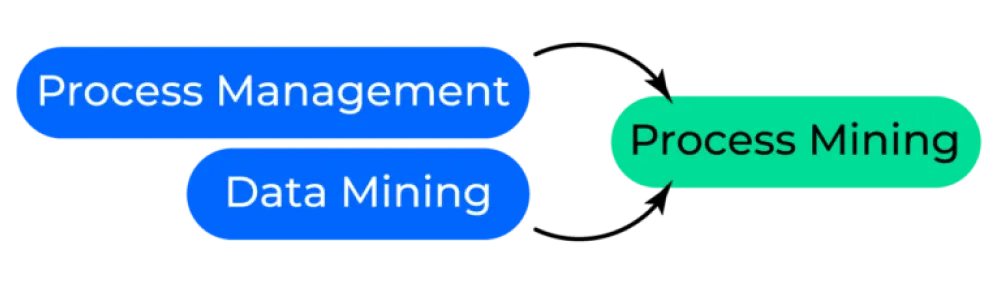
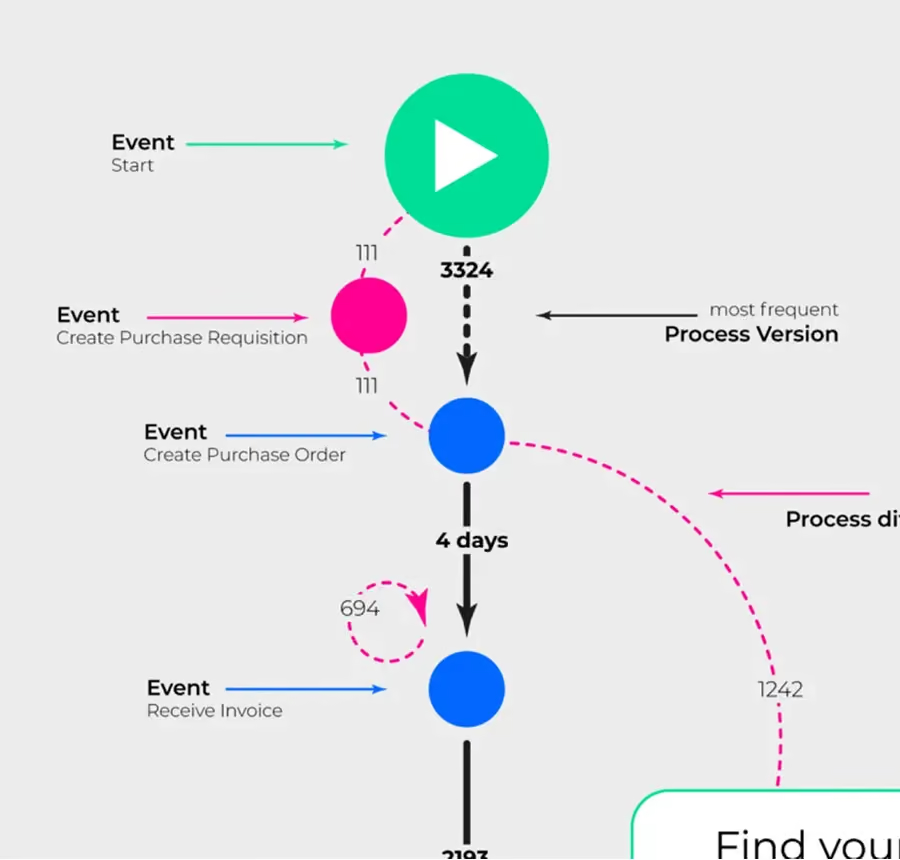
Process Mining is a technology for the systematic analysis and evaluation of business processes. In such a digitalized world, the problem often arises that overview is lost due to an infinite amount of incoming data. Process Mining examines this data, visualizes the process flows in real time and identifies weak points. Effort, time and ultimately the costs for process analysis and optimization can thus be significantly reduced.
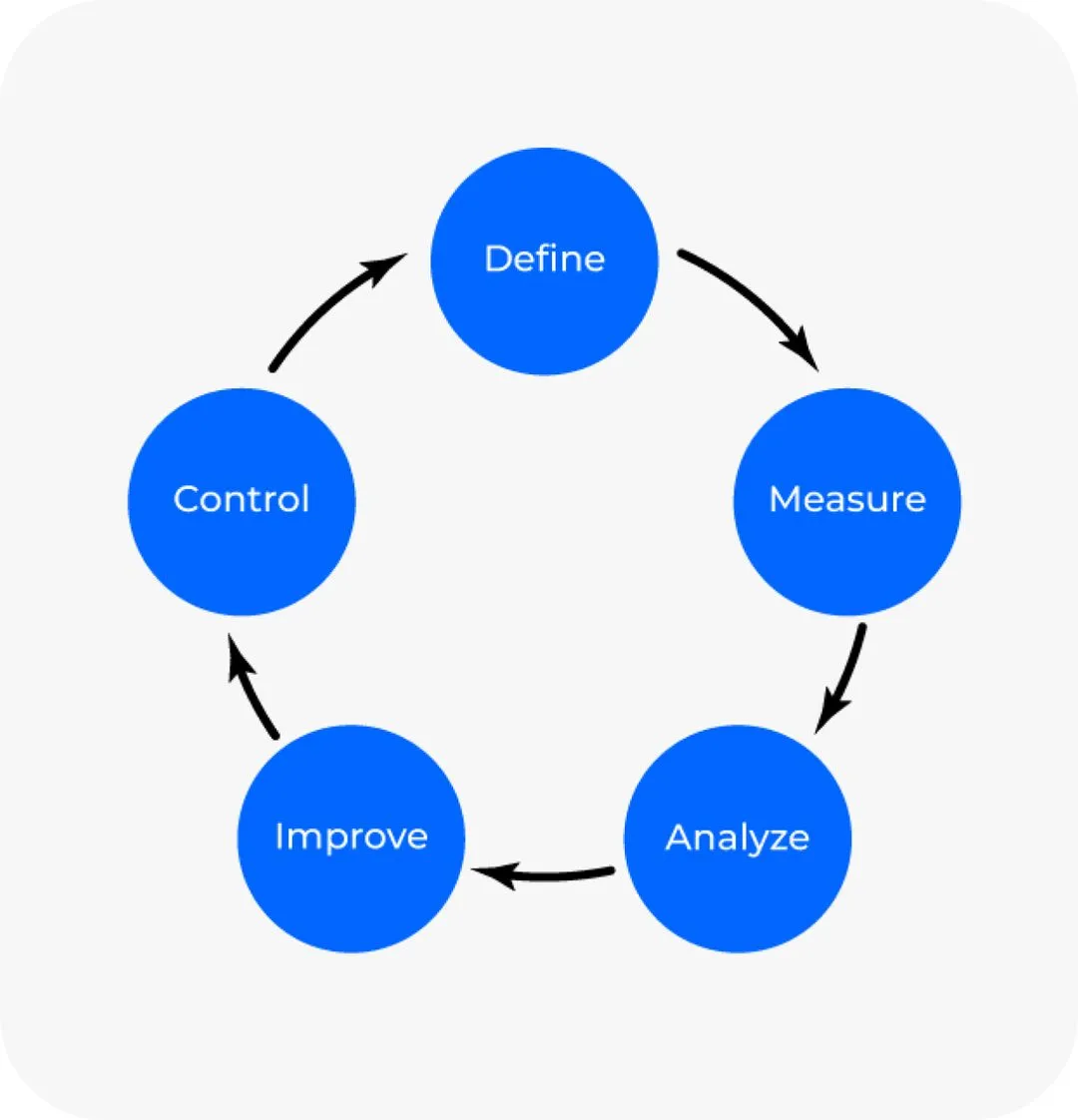
Problems are concretized, requirements identified and the objective is defined
Process data is evaluated and deviations from the target process are made apparent
Causes of problems and inefficiencies are identified, analyzed and processed into visual indicators
Countermeasures are taken to optimize the detected vulnerabilities
Improvements are continuously monitored to identify additional potential
The negative consequences look like this:

Reduced efficiency
A lack of transparency on working methods in companies hinders the ability to check and improve efficiency.
Dissatisfied customers
Customers experience chaotic processes due to long waiting times or a lack of service.
Limited corporate value
There is hidden business potential in every company that promises economic added value without a great deal of effort.
The negative consequences look like this:
So, what can you do to actually improve performance? First, you need a clear understanding of processes within the company. When all relevant points are connected, a large, organized overall picture is created.

With Process Mining you can answer these questions:

How well are processes currently working?
What can be improved?
What is going well and what doesn't?
Where do the hidden business values lie?

Objective insights– based on facts
Process Mining is based on data and facts. This is because all information is derived from real data. There is no more precise way to monitor and analyze business processes.
Precision, speed, cost savings
While process mapping is time-consuming and often only provides imprecise, subjective data, Process Mining impresses with its speed and precision. On top of that, it is also considered more cost-effective than many other methods.
No need for a redesign
Many are hesitant to optimize their processes. This is because they are often required to replace systems or initiate other major changes. If this is not in your interest, Process Mining is your optimal choice. It works in addition to your existing systems and effectively helps to leverage your existing investments. Redesigns are not necessary.
Download Two Pager
Download the Two Pager and find out in the compact PDF what advantages mpmX has in store for your organization.

Bringing process reality to light
All data and process insights in one place
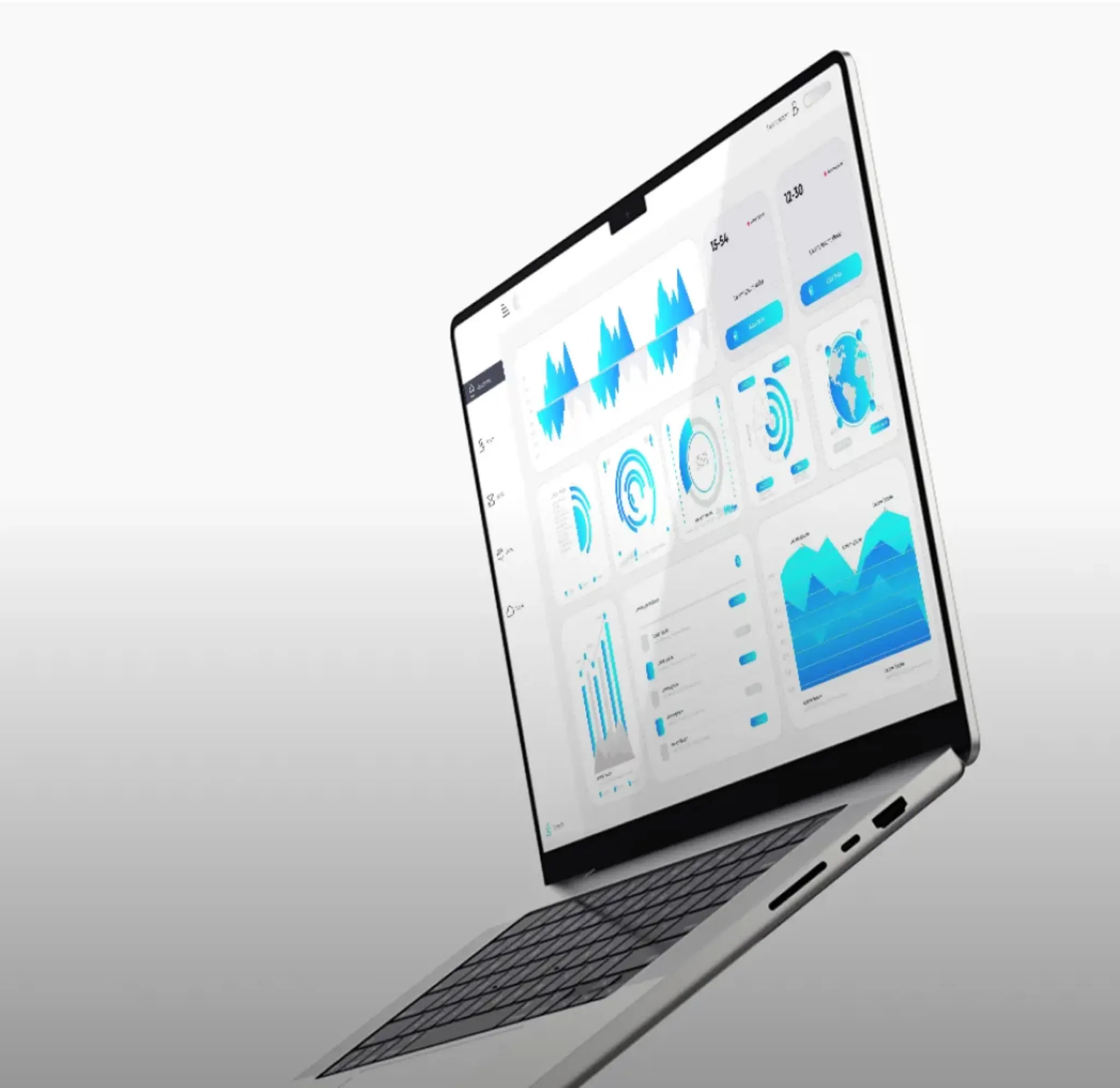
The mpmX dashboard combines KPIs with interactive process analysis, while the Process Analyzer presents data flows visually and interactively. This visualization allows you to easily identify frequent process variations. You can switch views and apply filters based on different factors. Natural language search and AI capabilities provide insights for informed and facilitated decision making.
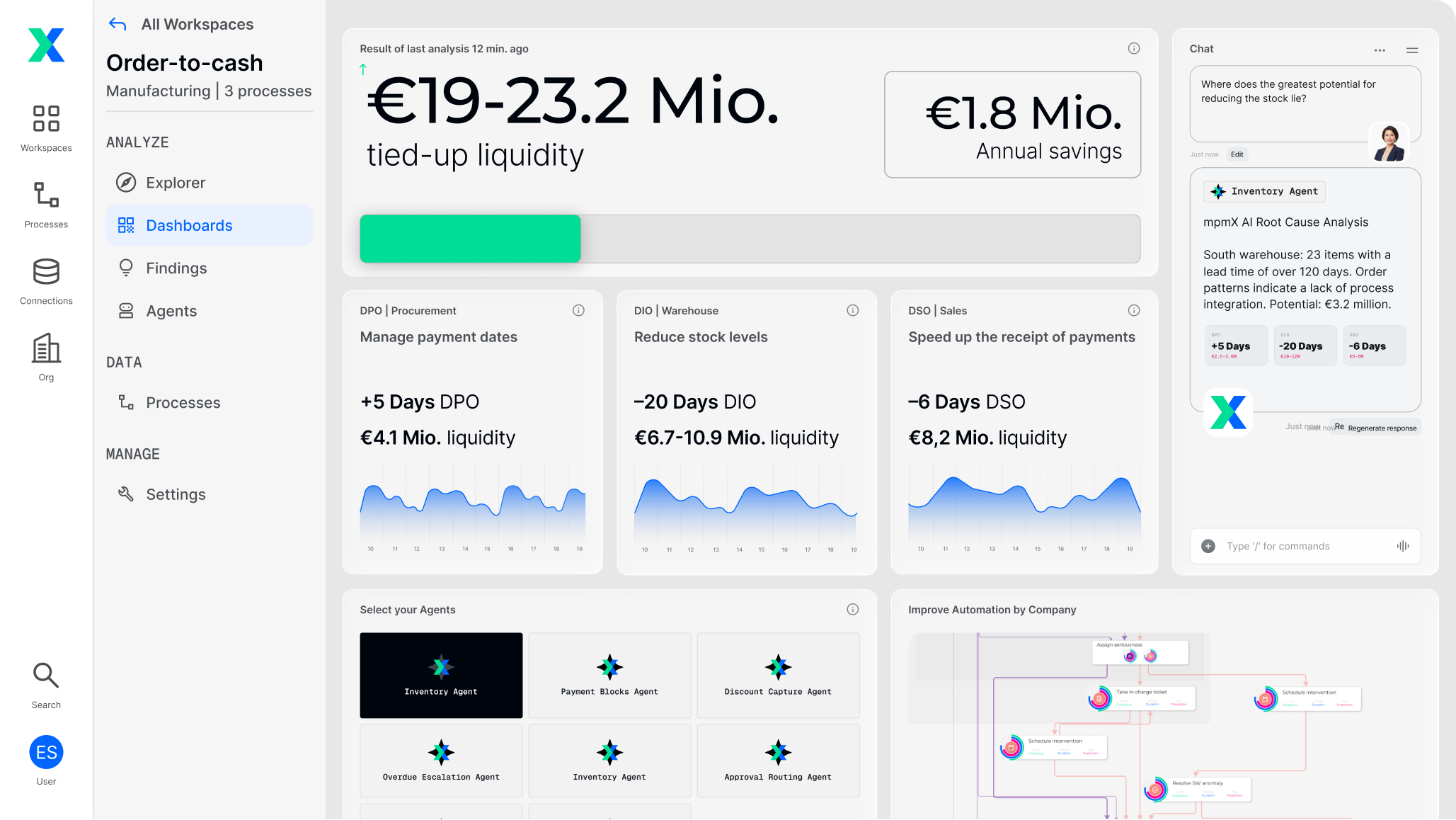
2-in-1: Process & performance indicators
The combination of process performance indicators (PPIs) and key performance indicators (KPIs) gives you a single point of truth for analyzing, optimizing and managing your business and value creation. This opens the doors to a corporate culture driven by insight as well as to improved operational excellence.
Associative discovery & search
Native InMemory technology enables arbitrary views of all data and processes. It indexes and understands every correlation in your data, so employees can freely search in any direction. Just as x-rays offer insights to hidden parts of the body, the associative discovery and search capabilities gives you data insights you can’t get using query-based tools.
Self-service with governance
Employees can carry out analyses and create automations independently using the self-service functionalities while complying with data governance. Seamless collaboration between IT, data scientists, process managers and users leads to maximum insight and more informed decisions in an astonishingly short time.
Augmented intelligence & natural language
In addition to the unparalleled options for analysis, users can expect first-class assistance. Augmented intelligence functions, such as process insights suggestions and natural language interaction with the Insight Bot, provide employees with analytical, interpretative, and decision-making support.
Insights in Process Mining
How does Process Mining work?
The technique of Process Mining consists of recognizing, monitoring, and improving real processes by extracting event logs from information systems.
2-in-1: Process & performance indicators
The combination of process performance indicators (PPIs) and key performance indicators (KPIs) gives you a single point of truth for analyzing, optimizing and managing your business and value creation. This opens the doors to a corporate culture driven by insight as well as to improved operational excellence.
Digital traces in IT systems
The IT systems used in the process store event data, like ID number and timestamps, which are called event logs. These are the starting point for the Process Mining technique.
Event logs from the event data
The logs are extracted from the IT systems and transformed into a target format. As the data is available in many different databases and formats, data extraction is complex and demanding. The raw, unorganized event logs are structured by constructing new event logs in a standardized target format. These systematic event logs are tables that specify events using attributes. They contain an identifier (Case ID), an activity name (Activity Type), time marks (Timestamps) and other optional attributes.
Process model and analyses
The event logs can be used to generate a process model – a digital copy of the real process. The digital process can then be researched, filtered or cleaned up in the Process Mining software in order to optimize the real process.
Process Mining: An enrichment for every business
Efficiency is the top priority for most companies
– after all, it ensures success in day-to-day business. And this is exactly where Process Mining comes into play:
Process Mining gives you valuable information about how your business process actually works.
In this way, you can improve it, which can have a positive impact on your profits and many other areas. Some companies don't even know how variable their processes are, let alone the impact this variability can have. Sound familiar? There is a solution.
With Process Mining, never again lose track of how processes run across departments, systems and programs.
With mpmX, the ultimate comparison is possible. How should your processes work in theory and how do they work in practice? Thanks to our Process Mining tool, your departments will be able to communicate better and systems will work more smoothly. Thus none of your processes will get out of hand.
But what if you don't use Process Mining? Then this can entail the following risks:
Low efficiency
Loss of value
Unfulfilled customer needs
Higher strain on resources
See for yourself how Process Mining brings programs, systems, processes and people together to benefit your business!
Process Mining as a versatile method
Who can use Process Mining? Anyone! Because the use cases for Process Mining are nearly unlimited. This technology is suitable for an incredibly wide range of industries and business functions.
The number of possible use cases for Process Mining is almost unlimited. By using Process Mining to uncover weaknesses and eliminate inefficiencies, it is possible to strengthen supply chains, sustainability efforts, and many other areas.
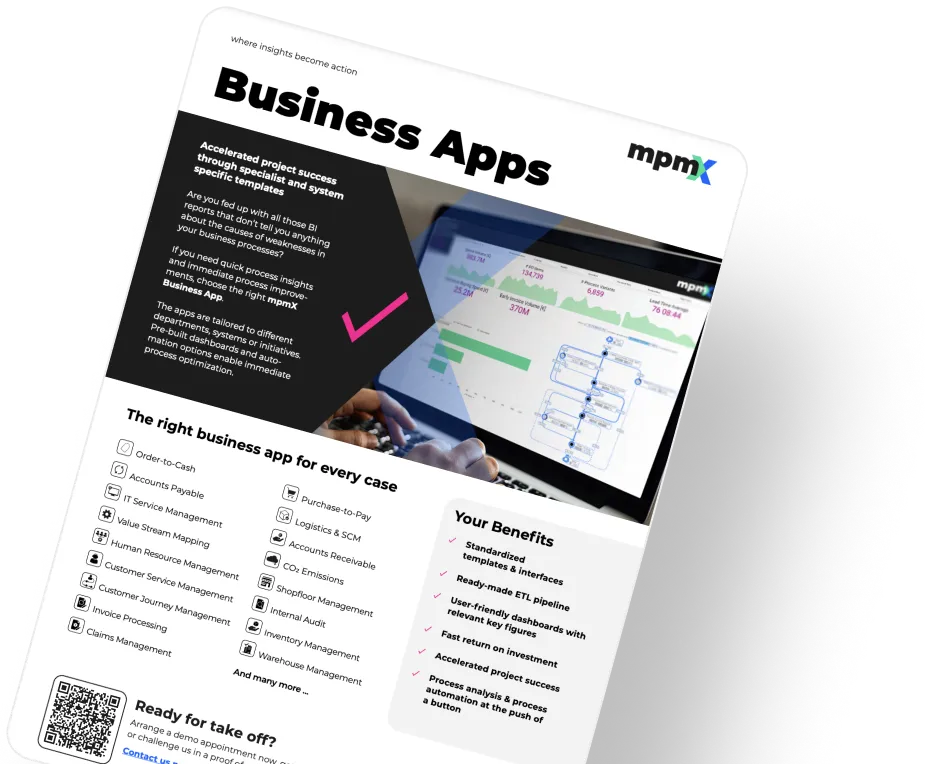
The right business apps for your use cases
For even faster process insights and immediate process improvements, choose the right mpmX Business App for your use case. The mpmX Business Apps are tailored to different departments, systems and use cases.
Process Mining: A must-have for businesses
Is Process Mining still a nice-to-have or has it become a must-have for companies?
As an expert, mpmX has the answer: Process Mining is an important component in companies that want to go places.
The reasons are very simple. In a time of constant change, new technologies are constantly emerging. Customer expectations are also rising. And the competition is not sleeping either. As a result, the need for greater efficiency is constantly increasing.
If you want to remain competitive, create satisfied customers, and achieve significant growth for your company, you have no other choice: Process Mining is your modern solution.

“Through 2026, insufficient business process management maturity will prevent 90% of organizations from reaching desired business outcomes from their end-to-end process mining initiatives.”
Gartner, Magic Quadrant for Process Mining Platforms, April 29, 2024
The right time is now!
When should you start with Process Mining? The answer is: Now! Because if there's one thing we know as experts, it's that it's never too late or too early to start Process Mining in your company.
Are you entertaining the idea but not sure whether Process Mining is right for your company? Then act now. The sooner you implement Process Mining into your BI toolbox, the faster you can reap the benefits of process optimization.
It is especially worthwhile to think about Process Mining in the following areas of your business:

Search for new ways to create added value
Mergers and partnerships with other companies
Optimizing measures for improved sustainability
Systems Migration
Reorganizing Shared Services
Process improvement
Search for new ways to create added value
Mergers and partnerships with other companies
Optimizing measures for improved sustainability
Systems Migration
Reorganizing Shared Services
Process improvement

Collect data
Create a solid data basis. This is the starting point for Process Mining. Determine the areas in your company where a lot of data is collected. Business applications prove to be particularly beneficial in this regard. It is also possible to extract a large amount of data from IoT devices. Our platform translates the collected data from various sources into a unified event log.
Compare target and actual status
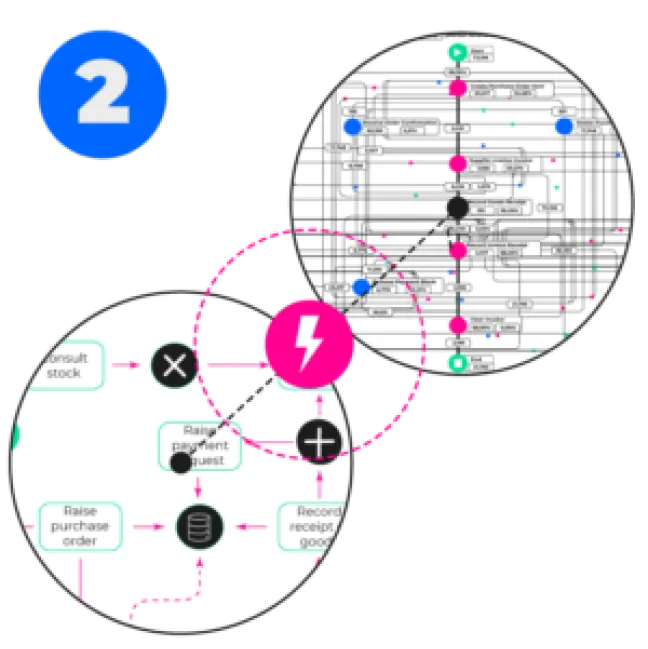
What are the target processes you want to achieve? A simple comparison of the model to the as-is state of your processes can be used to determine what the optimum process in your company looks like and which deviations still exist.
Determine optimizations
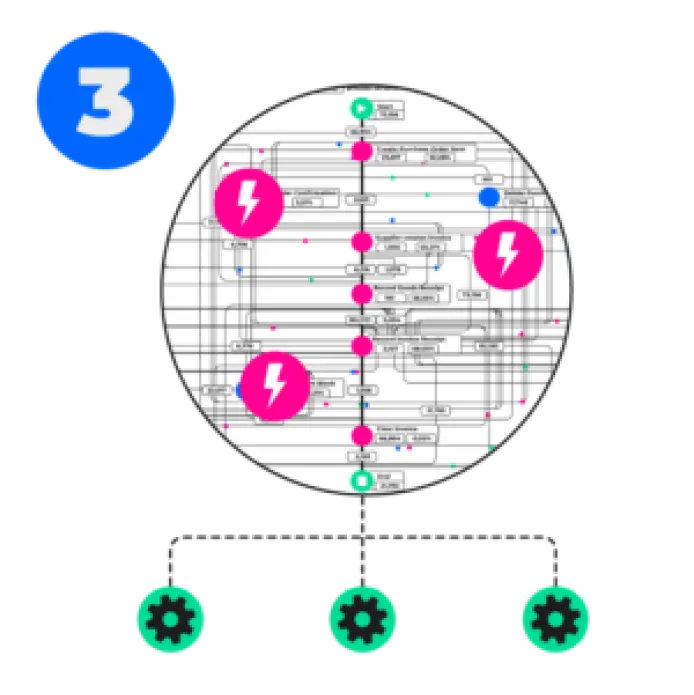
Which processes need to be optimized most urgently? Ask yourself the following questions for each process:
- Is the process optimally elaborated, or is there still room for improvement?
- Does everyone involved live this process, or are there critics in the company?
- Are there workarounds that indicate that a process is not working perfectly?
With the help of your hypotheses and an optimization pipeline, you can use mpmX to quickly start the analysis and objectively identify optimization potential.
Operate monitoring
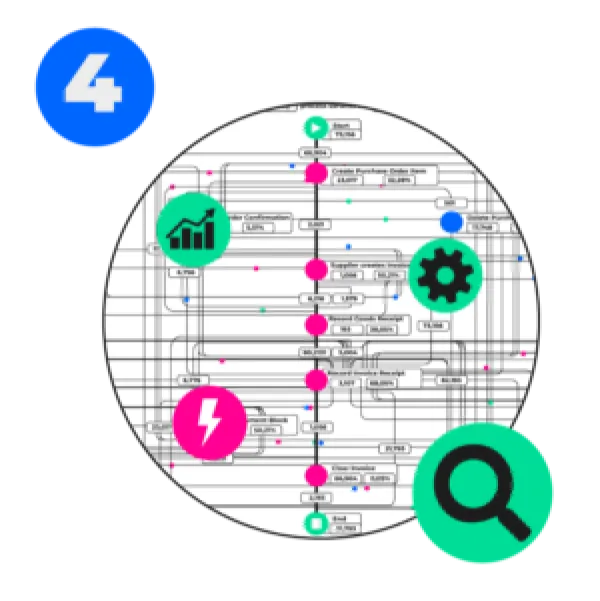
Are the changes that have been initiated showing an effect? Do some areas still need to be adjusted? You can find out through in-depth monitoring. Process Mining tools help you to monitor the new processes from day one.